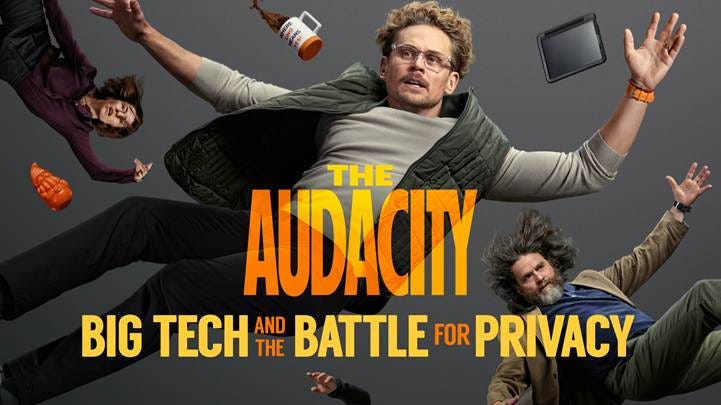
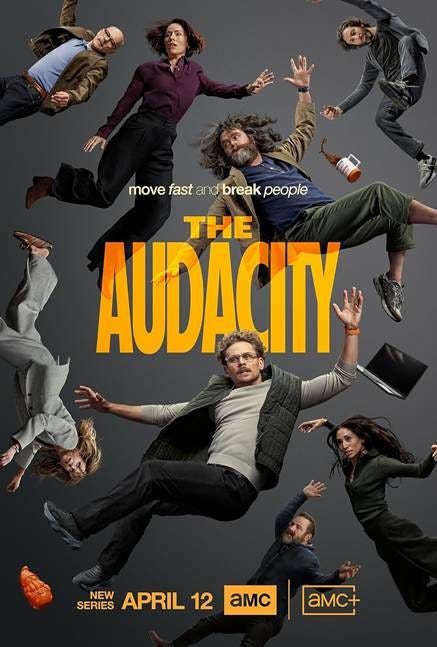
I recently finished watching the first season of a terrific new TV series, The Audacity (2026). The show chronicles Duncan Park (Billy Magnussen), an out-of-control tech billionaire who has a company called Hypergnosis. The show was created by Jonathan Glatzer, who was a writer and producer for several TV series including Succession, Better Call Saul, and Bloodline.
Silicon Valley Meets Succession
The Audacity is a fusion of Silicon Valley and Succession, two superb TV series. Silicon Valley (2014-2019) is a satirical depiction of the tech industry, but it’s lighter and more comedic than The Audacity. For all their flaws, many characters in Silicon Valley are endearing. Not so with The Audacity.
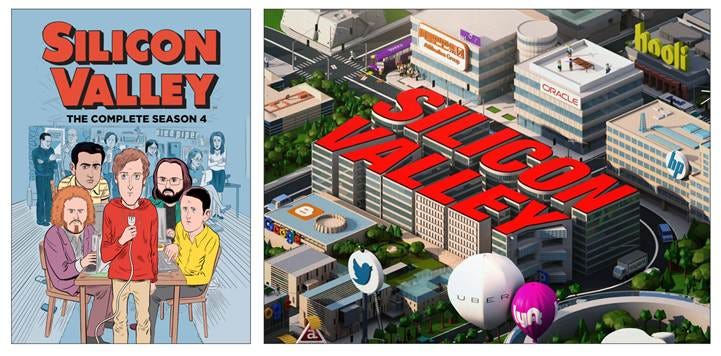
Like Silicon Valley, The Audacity portrays the world of the tech industry as cutthroat, where the game is a constant scramble for survival, an everlasting hunt for investors to keep the money flowing. And this makes even very rich and powerful people like Duncan feel vulnerable and over-stressed as they grovel for investment by touting how much more powerful and disruptive their tech is than everything else.

Even more than Silicon Valley, The Audacity reminds me most of Succession (2018-2023), where all the characters are monsters in different variations. It’s no surprise that Glatzer was involved with Succession. Like the characters in Succession, the characters in The Audacity are awful. Duncan is a monster because he’s narcissistic and utterly self-absorbed; he has no boundaries, no limits, and is ruthless and maniacal.
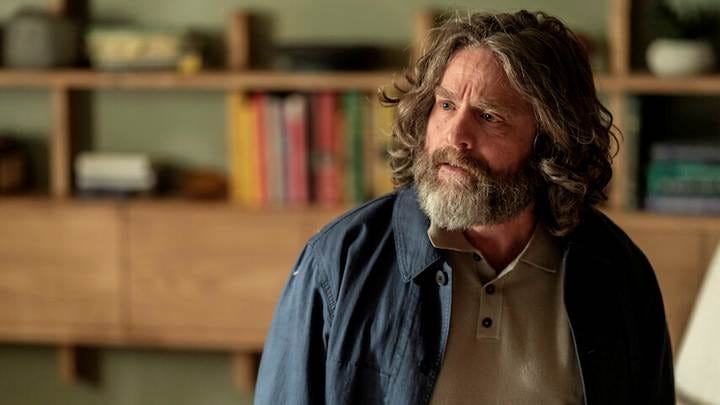
Duncan doesn’t intend to be mean; he lacks maturity and the ability to see beyond himself. No matter how successful he becomes, he’s chronically unsatisfied and unhappy. He turns into a veritable beggar trying to court Carl Bardolph, a legendary, successful, and ridiculously wealthy tech entrepreneur played brilliantly by Zach Galifianakis—perfect casting.
“Privacy is Not a Thing Anymore”
The show has a strong privacy plotline. An engineer named Harper (Jess McLeod) has developed a new tech system that gathers and analyzes enormous amounts of personal data. Duncan salivates over this new technology, eager to unleash it to the world and monetize it for all its worth. His motto is that “privacy is not a thing anymore.”

Here’s a hilarious monologue by Duncan about his views on privacy:
Privacy has value. An unmined motherlode of value. Because privacy lives in a constant state of fear. And where there is fear, there is money to be made. I mean, we could already predict if, say, uh, you’re gonna get a divorce. We will hit you with ads for lawyers, for plastic surgeons, gyms, dildos, teeth whitening. But if we could track in real time people’s mental and emotional states… We can see whether somebody’s feeling anxious, hungry, horny, distracted, determined. Basically, we know if you’re banging your secretary before you do. If the issue’s there, we’ll provide the scratch. And that’s legal. The American people have, through their elected representatives, given this question profound and careful thought. We had hearings, remember? . . .
And do you know what Congress decided on all of these? That the industry would police itself. And you know what we did? We actually, we actually did, mostly. But there are so many things we can do if we wanted to, but we don’t even if it would make us a lot of money. Because of what? What are we afraid of? Another toothless congressional hearing? No, that mindset impedes innovation. I call that self-police brutality. . . Tech lives matter. . . .
I am building the data company I’ve always wanted. It’s honest. No secrets. Because privacy is not a thing anymore.
Here’s another satirical exchange between Duncan and his therapist, Sarah Goldberg (Joanne Felder) from season 1, episode 7:
Sarah Goldberg: I just, the genetic makeup of an individual is just, it’s a sacred thing. The man who discovered the genome felt that the double helix of DNA was proof of God’s existence. I mean, this isn’t just shopping habits or even private browsing. This is blood. This is the stuff of life.
Duncan Park: Data is bigger than life, okay? Data will go on forever, live longer than you. I mean, blood, blood, that’s like wet and gross. Data, data is immortal.

Powered by Harper’s technology, Duncan founds a new company called P.I.N.A.T.A. (an acronym for the “privacy is not a thing” motto). It is Harper who approaches Duncan because Harper’s new CEO (Anushka) wants to pause her new system. She explains to Duncan why she chose to work with him.
Duncan: You want to know how fast it can go and how to make it go even faster. And so why me? Why not somebody else?
Harper: You have a really firm grasp on the lowest common denominator. And that’s just where the market’s at right now. That’s just reality.
Duncan’s business model is to charge people $29 for privacy protection and $299 to have access to all the data of everyone else who doesn’t have the company’s privacy protection. It reminds me of the Godfather, where the mob offered security services. If a business declined to buy the service, then they’d rob the business.
The Audacity has great dialogue and monologues. It’s very dark satire, veering frequently into territory that is more horror and tragedy than comedy. There are only a few characters to root for, and they generally don’t end up winning.
In one episode (season 1, episode 6), Anushka Bhattachera-Phister (Meghan Rath) attempts to steer Duncan’s previous company Hypergnosis to be more privacy friendly, but she’s met with skeptical clients.
Anushka: Look, privacy is what makes us us. Some things people just don’t want recorded. Like how you collect your driver’s sexual activity.
Car Company Executive: Look, the insurance companies that you help us sell to for a profit want to know who’s driving distracted.
Anushka: But do you need, for example, to monitor their weight gain?
Car Company Executive: That appeals to the buyers to represent both fast food chains and diet pills. It’s a winner.
Anushka: I’m not saying don’t record navigation, reckless driving, listening habits even. But what’s the benefit to recording the driver singing along?
Car Company Executive: Well, you have polyps on your throat, wouldn’t you want to know? All of our clients agree to this.
Anushka: 97 pages, 7-point font, and the car won’t function as designed if you don’t agree. It’s not exactly an agreement.
Car Company Executive: No, you’re right. It’s called a business model. The truth, we don’t sell cars. We sell data collection devices on wheels with heated seats. Cars are expensive. Data has profit margins that you can drive a car right through.

A Pathological Game
The show skewers the tech industry, especially the billionaires who run it. But even the out-of-control billionaires like Duncan aren’t fully in control themselves. The pathology emerges not just from these deeply flawed individuals, but also from the world in which they live. The entire tech ecosystem is pathological. Growing a tech company is a ruthless game that attracts players like Duncan, and the game proves to be even more powerful than the players, no matter how successful they become. It’s a game nearly impossible to play without sacrificing one’s integrity, ethics, and responsibility.
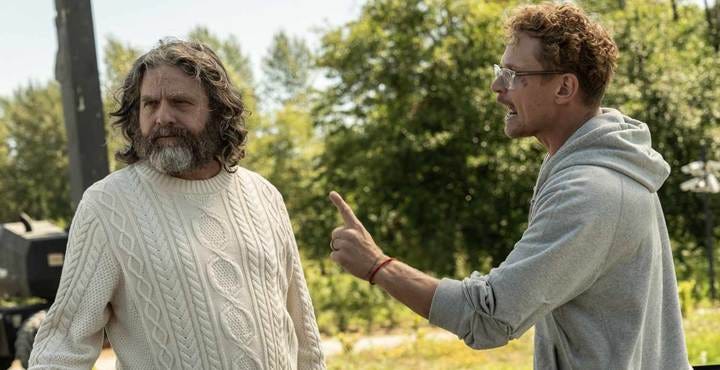
Carl Bardolph explains how it all works (season 1, episode 5):
Let me ask you: Could you imagine using your algo to spot people in crisis communities in need and actually help them? Well, that sounds like some of the things we talked about when we first started making the sausage. . . .
[T]here are about 20 dudes in the valley that make as much or more than me, and we all come to the same fork in the road: Do we want humanitarian legacy or do we want planetary reach? Do we want to save the world or control it? Heal or conquer?
Well, both have their charms but I will tell you this: Most of us go Dr. Evil. I used to love the Valley but what it’s become—I hate it. We’ve broken and disrupted everything and now there’s nothing else to break and now they want to upload consciousness so guys like me can live forever disrupting death.
As James Poniewozik aptly puts it in his review in the N.Y. Times:
“The Audacity” is powered by a sustaining belief: that the business it chronicles is no longer about creation but about extraction. Its version of Silicon Valley wants to strip-mine its consumers’ digital lives for granules of precious ore. Duncan — whose entire business plan is a form of corporatized blackmail — may be its most squirmy, sweaty manifestation, but there’s something honest about his naked desperation.
For those who enjoyed Succession and Silicon Valley, or who like dark satire about privacy and the tech industry, The Audacity is well worth watching.
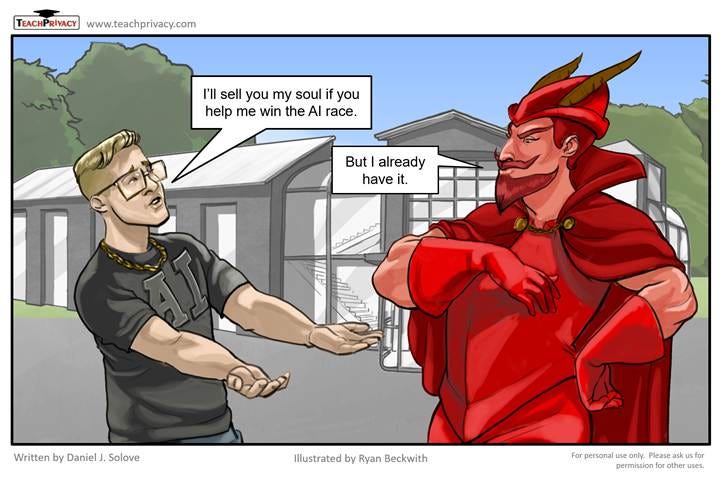
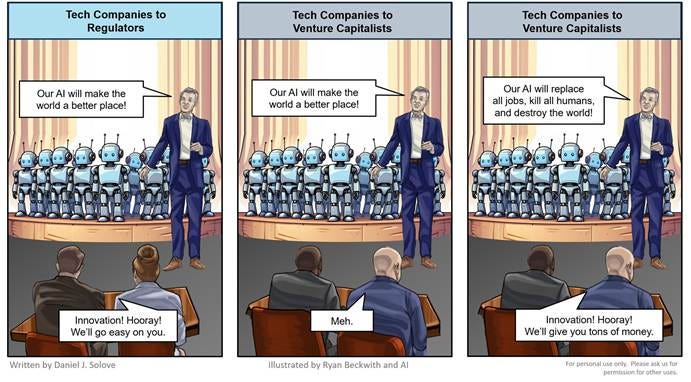
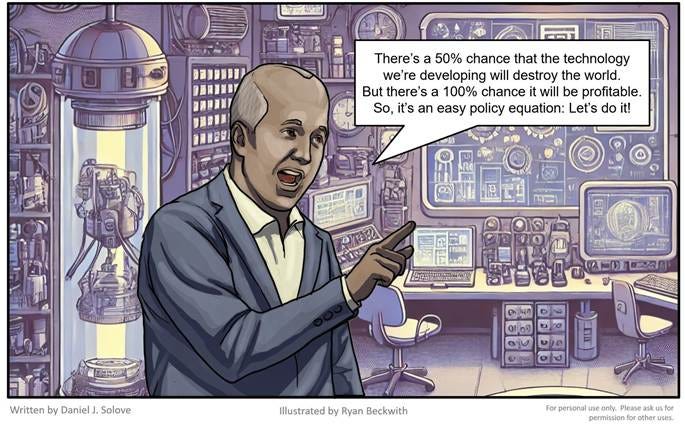
I’ll end with a few cartoons I created about the tech industry that are quite apropos for The Audacity.
* * * *
Daniel J. Solove is the Bernard Professor of Intellectual Property and Technology Law at the George Washington University Law School. He is the founder of TeachPrivacy, a company that provides workforce privacy, cybersecurity security, and AI training to companies and organizations around the world. He is the author of 10+ books and 100+ articles.
You can follow his events, writings, training, cartoons, and resources by subscribing to his free weekly newsletter.

Subscribe to Solove’s Free Substack
A supplement to Solove’s regular newsletter with more in-depth discussions