

I’ve curated a list of recent works on privacy, AI, and tech that will be worth your time checking out.
Authors included:
- Orin Kerr
- David Sella-Villa
- Susan Tanner
- Tonja Jacobi
- Elyse Ackermann
- Cory Doctorow
- Christina Lee
- Nel Escher
- Nikola Banovic
- Ben Green
- Najarian Peters
- Danielle Keats Citron
- Spencer Overton
- Ari Ezra Waldman
- Katrina Geddes
- Emily Benfer
- Joseph Turow
Government Surveillance and
the Fourth Amendment
Orin S. Kerr, The Fourth Amendment After Chatrie (2026)
Kerr weighs in on Chatrie v. United States, a key Fourth Amendment case decided by the U.S. Supreme Court this term. It has been a long time since the Supreme Court issued a Fourth Amendment ruling, and Kerr views Chatrie as a “blockbuster.” Kerr contends that “Chatrie presents itself as an application of precedent, but a close read shows that it repeatedly recasts old cases and adopts new principles for the Fourth Amendment. Chatrie is now the most important Fourth Amendment case on new technology, and it throws into question a wide range of existing surveillance practices.” Kerr argues that Chatrie can be read in three possible ways, each with different implications.
If you’re interested in my take on Chatrie, I wrote about the case in this short essay: Is the Fourth Amendment Third Party Doctrine Dead? Thoughts on Chatrie v. United States
David Sella-Villa, The Third-Party Privacy Problem, 27 N.C. J. L. & Tech. 411 (2026)
Most data privacy laws apply to “personal data” which is identified or identifiable to individuals. But data from “external sensor systems allow vehicle manufacturers, providers of automated driving systems, regulators, researchers, other market participants, and law enforcement to readily identify groups, but not necessarily individual people. These group classifications facilitate decisions that affect the rights and interests of third parties, and privacy law offers these people little recourse.”
Sell-Villa argues that even without identifying people, the “data collected from external sensors on vehicles” can affect privacy interests, and privacy law must address this gap.
Susan Tanner, From Data to Decisions: Why AI Inferences Should Count as ‘Effects’ Under the Fourth Amendment, 27 Minn. J.L. Sci. & Tech. 287 (2026)
Tanner argues that data brokers and inferences are two gigantic loopholes in Fourth Amendment protection. She contends that “AI-generated inferences should be treated as constitutionally cognizable ‘effects’ within the meaning of the Fourth Amendment’s protection for ‘persons, houses, papers, and effects.’”
As Tanner elaborates: “While ‘effects’ has traditionally been understood to refer to personal property, its broader meaning encompasses anything that affects or pertains to an individual. Algorithmic inferences are quintessentially personal: they are about specific individuals, they purport to reveal intimate characteristics, and they are used to make decisions that profoundly affect those individuals’ lives.”
She also argues: “Traditional Fourth Amendment analysis has focused on individual privacy interests: does the particular search or seizure intrude upon a particular person’s reasonable expectation of privacy? This Article proposes that the Fourth Amendment’s reasonableness inquiry should also account for structural democratic harms, particularly when surveillance is deployed at scale to manipulate political information environments.”
Tonja Jacobi and Elyse Ackermann, Shadow Technology, Mass Surveillance, and the False Promise of Carpenter (2026)
Jacobi and Ackermann argue that the U.S. Supreme Court case, Carpenter v. United States, the leading case involving digital surveillance before this term’s Chatrie case, has “provided little guidance or constraint on other forms of covert dragnet monitoring beyond cell-site location information.” They argue that the government employs “shadow technologies” that are in use “for years before the public learns about them.” The government conceals these technologies by “‘rediscovering’ the evidence they unveil through other means” which creates “‘shadow evidence’—vital information obtained through secret technology and never disclosed to the public or even defendants.” They propose reforms to shine the light on this shadowy world.
Artificial Intelligence
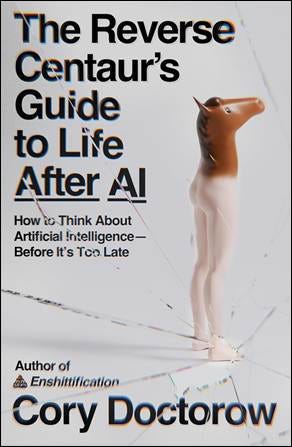
CORY DOCTOROW, THE REVERSE CENTAUR’S GUIDE TO LIFE AFTER AI (2026)
In a provocative and essential book, Cory Doctorow argues that AI has been over-hyped and the dystopian future many fear it might bring is not inevitable. A “centaur is a person who is assisted by a machine” and a “reverse centaur is a human who is conscripted into acting as an assistant to a machine.” He writes:
This centaur/reverse centaur distinction is the hart of the paradox at the heart of the debate about the usefulness of AI tools,” Doctorow writes. “when you find yourself surrounded by people swearing that a given tool is worse than useless and others swearing that it has made their lives easier and better, you can bet that the former group is made out of reverse centaurs who’ve had AI imposed upon them, the latter group is all centaurs who’ve gotten to make up their own minds about where, when, and how to use AI tools. The solution to the paradox is to stop thinking about what the gadget does, and pay attention to whom the gadget does it to and who the gadget does it for. The important part isn’t the technical characteristics of the device, it’s the power relationships of the people who use the device.
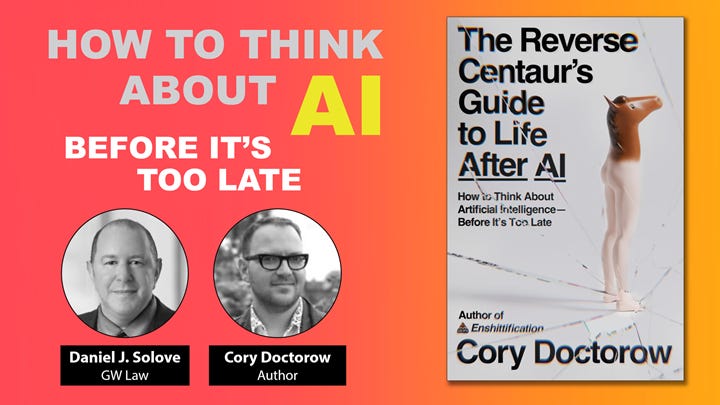
I’ll be discussing Cory’s book with him on LinkedIn Live on Monday, Sept. 21 at 11 AM ET. Please register (free) here.
Christina Lee, AI Agents’ Shadow Principals, 17 U.C. Irvine L. Rev. ___ (forthcoming 2027)
Christina Lee examines how the law should govern AI agents, which “pose distinct harms.” She notes that although agency law appears like a fit for AI gents, “today’s agency law does not have the tools to adequately reason through the role an AI agent’s developers play in transactions mediated through the AI agent.” The reason is because “the companies that design, build, and market AI agents for users to deploy—are what I call the shadow principals of the AI agent, exerting persistent, extensive, obscured, though incomplete influence over an AI agent’s actions even as it acts purportedly on behalf of the user.” Agency law fails to account for the role these companies play.
Nel Escher, Nikola Banovic, and Ben Green, Algorithm Auditing Policies Rest on Flawed Assumptions About Public Sector Systems (2026)
The authors examine the role and efficacy of regulations that require auditing of algorithms. They argue: “While audit policies conceptualize harm as discriminatory bias, government algorithms can produce a much broader range of issues, including misallocation of public resources and violations of due process. While audit policies investigate algorithms as static and isolated pieces of software, these systems are dynamic and embedded in complex relationships with other technical systems and human practices. While audit policies envision that problems uncovered by audits will be corrected, many public agencies lack the capacity to fix or replace automated systems.”
Privacy, Race, and Ethnicity
Najarian R. Peters, Racial Privacy I: The Quest for Whiteness by European Immigrants in America, 23 U.C. L.J. Race & Econ. Just. 183 (2026)
Peters examines the practice of racial passing in the U.S. She focuses on European immigrants who became White in America. As she contends: “Many immigrant Europeans were not viewed or treated as the same race as White Anglo Saxons but were eventually allowed to be classified as Whites socially and by law. These groups were encouraged to suppress their different racial identities to access Whiteness, through assimilationist methods. Their descendants inherited racial Whiteness, many were encouraged to forget their racial backgrounds, and with the assistance and protection of law and governmental policies, throughout the nineteenth and twentieth centuries, they maintained their new racial status as White.”
Peters observes that certain groups were able to be classified as Whites but others were not. Her article “excavate[s] an area of privacy practice that has been largely unacknowledged and therefore, undertheorized: the existence, meaning, and value of racial and ethnic privacy in America, as one of its oldest and arguably self-evident traditions, that paved the way for millions of people to achieve the American Dream, while denying the same to so many others.”
Danielle Keats Citron and Spencer Overton, Digital Ethnonationalism U. Pa. L. Rev. (forthcoming 2026)
Citron and Overton develop the concept of “digital ethnonationalism,” which is “the design and operation of opaque algorithmic systems and policies that reproduce racial and religious hierarchy and cultural homogeneity at scale.” They argue: “For those committed to liberal, pluralistic democracy, the first step is to identify digital ethnonationalism and to develop strategies to recognize, cabin, contain, and navigate it within technology development, governance, law and policy. There is no silver bullet-effective responses are multifaceted and context-specific. Still, several core principles should guide action, including fairness (mitigating bias and proxy discrimination), pluralism (advancing linguistic, cultural, and epistemic diversity), autonomy (constraining covert behavioral manipulation and preserving meaningful human agency), and dignity (treating marginalized groups and women with respect so that they can participate in the networked age).”
Children’s Privacy
Ari Ezra Waldman and Danielle Keats Citron, Youth Privacy’s Constitutional Reckoning, Georgia L. Rev. (forthcoming 2026)
Waldman and Citron argue that U.S. Supreme Court jurisprudence about parental rights is “misplaced and harmful” when dealing with issues of “corporate exploitation.” As they elaborate: “Parental rights emerged from litigation where parents fought for the right to impart their religious beliefs and traditions to their children as they wished, whether in the home, school, or community. However, vast structural differences exist between the contexts in which parents pass on religious beliefs and those in which parents aim to protect children’s data from corporate exploitation.” Applying this jurisprudence deny youth “the privacy that they need to thrive and forge relationships, including with their parents. “ The “parental control model results in contests over the authority of the state, parents, and children (with children hardly ever in view).” They contend that “rather than focusing simply on decisionmaking authority, youth privacy debates should ask: Who benefits and who loses? Whose interests are being ignored or worse damaged? What political agendas are being empowered or disempowered?”
Other Privacy Issues
Katrina Geddes, The Inconsentability of Deep Fakes, Harv. J. L. & Tech. (forthcoming 2027)
Geddes critiques the creation of deepfake images and videos. She argues that not only is the non-consensual creation of deepfakes wrong, but even the consensual creation of such content can be problematic because “certain uses of our AI likeness may be fundamentally inconsentable.” She contends that “the legitimacy of AI-generated content does not turn on the presence or absence of individual consent.”
Emily A. Benfer, Dismantling The “Scarlet E”: Eviction Record Privacy As Health Justice, 86 Ohio St. L.J. 1081 (2025)
Emily Benfer examines the way evictions can lead to blacklisting of tenants and can become a scarlet letter. She writes: “Because there are few limits on who has access to court records or how long they remain available, the stain of a single eviction filing severely restricts future housing opportunities.” She calls it the “Scarlet E.” She observes that there is “a lucrative market for rental screening tools and motivation to take advantage of the right to access court records.” More than 2,000 companies offer these tools. Benfer “applies the Health Justice Framework to the ‘Scarlet E’ and open access to eviction court records as a roadmap for achieving health and housing equity, while preserving the fundamental principle of open access to the courts.”
She has written a short essay based on her article here.
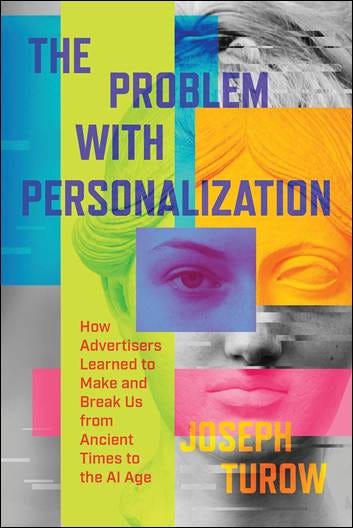
JOSEPH TUROW, THE PROBLEM WITH PERSONALIZATION: HOW ADVERTISERS LEARNED TO MAKE AND BREAK US FROM ANCIENT TIMES TO THE AI AGE (2026)
Turow’s book examines the history of personalization and its present, which is hyper-tailored with AI. He argues:
Today’s high-velocity AI versions draw on past aspirations and assumptions about personalization while weaponizing it in unprecedented ways that drive social fragmentation and the disappearance of shared social reality.” He argues that “those who worry about marketing from the standpoint of privacy and surveillance don’t tend to consider that the reascent of personalization to the peak of consumer advertising is starting to have profound transformative consequences at the level of society as a whole. Now driven by artificial intelligence, personalization is increasingly diminishing the ability to share ourselves in ways that allow for publics and civic experiences to grow. (pp. 234-25).
I agree with Turow’s point about the societal impact of personalization but would qualify his claim about those who haven’t considered this impact. Although many policymakers have failed to do so, many privacy scholars have long critiqued individualistic conceptions of privacy. For a discussion of the literature, see my piece with Woodrow Hartzog, Kafka in the Age of AI and the Futility of Privacy as Control, 104 B.U. L. Rev. 1021 (2024).
* * * *
Daniel J. Solove is the Bernard Professor of Intellectual Property and Technology Law at the George Washington University Law School. He is the founder of TeachPrivacy, a company that provides workforce privacy, cybersecurity security, and AI training to companies and organizations around the world. He is the author of 10+ books and 100+ articles.
You can follow his events, writings, training, cartoons, and resources by subscribing to his free weekly newsletter.

Subscribe to Solove’s Free Substack
A supplement to Solove’s regular newsletter with more in-depth discussions